Last verified: 24 October 2026. The dates mentioned in this article are labelled honestly: the AISSEE 2027 exam date of 31 January 2027 is EXPECTED per the NTA calendar — the 2027 notification itself is still awaited — and Diwali 2026 falls on 8 November. Everything else here is parenting guidance, not an official rule; where a fact about the exam appears, it follows our usual verification standard.
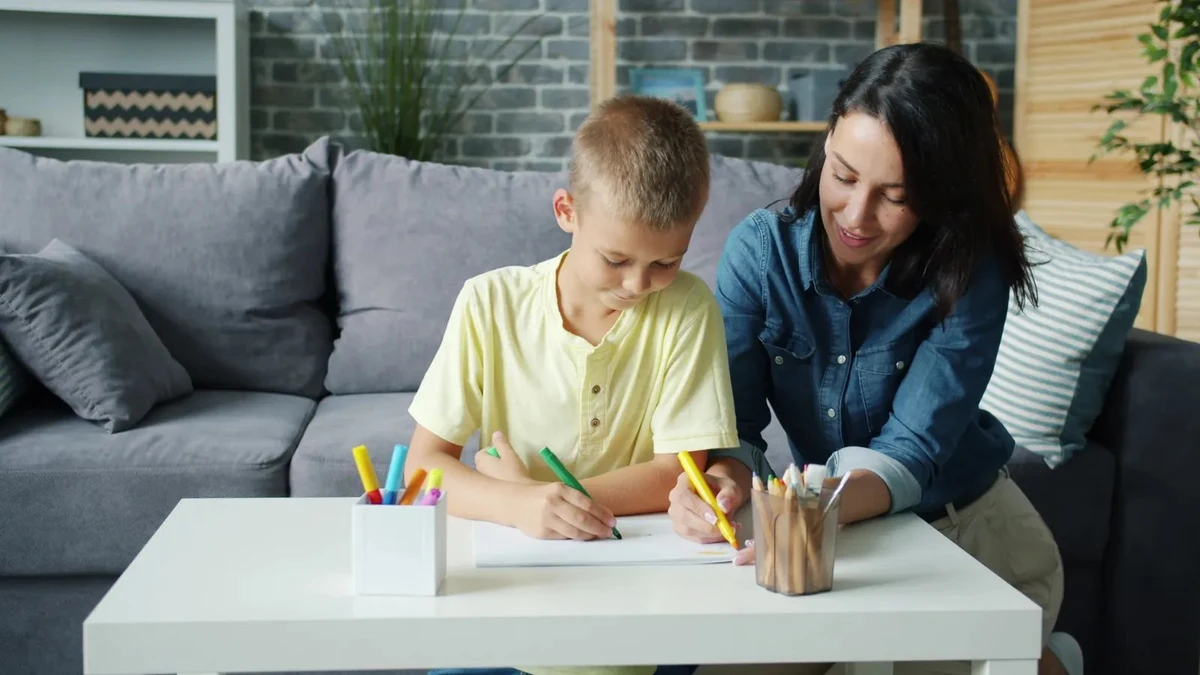
 Photo: Pexels
Ask a parent in a joint family how AISSEE preparation is going, and the answer is rarely about the child alone. Dada ji asks every evening how many questions were solved. Dadi ji worries the child is studying too much — or too little. A visiting uncle announces that the neighbour’s son scored 96 percent in a mock, as if that were helpful. None of it is unkind. Almost all of it lands as pressure.
That is the joint-family reality of AISSEE preparation: the child prepares in a house full of opinions, and the parents manage two syllabuses — the exam’s, and the family’s. Getting this right matters as much as any timetable, because a child who studies under daily judgement studies worse, not better. The reverse is true too: grandparents who feel included and given a real job become the steadiest support a young aspirant can have.
Most friction comes from everyone doing everyone else’s job. A short family conversation — ideally before Diwali, not during it — can draw three clean lines:
| Job | Belongs to | Everyone else does |
|---|---|---|
| Study plan, school choice, form decisions | Parents | Trust it, ask once, then step back |
| Daily encouragement and calm at home | Grandparents and elders | Protect the routine, not police it |
| The actual studying | The child | Own the effort, at an age-appropriate pace |
Write it down if your family communicates better on paper — a note on the fridge beats a debate at dinner. If grandparents live in the same house, they will hear the scores anyway; the point of the conversation is not secrecy, it is agreement about what happens next when a score is heard.
Elders resist boundaries most when the boundary leaves them with nothing to do. The fix is to hand them work that genuinely helps:
“Sharma ji’s grandson got 300 out of 300” is the sentence every AISSEE parent dreads, because it is usually unverifiable, always unhelpful, and impossible to argue with in the moment. The response that works is boring and repeatable: “Every child has a different paper and a different year, so we don’t compare scores. He is improving on his own last score, and that is what we track.” Say it warmly, say it identically every time, and then ask about something else — the weather, the sabzi, the cricket. Relatives take the hint faster from a changed subject than from a counter-argument.
The same rule applies inside the house. If two siblings are both preparing, never let one child’s score become the other’s target in front of grandparents. Children remember who clapped for whom.
Diwali 2026 falls on 8 November, right in the middle of the final preparation stretch. The families that lose momentum are not the ones that celebrate; they are the ones that never decided what “celebrating” means for study. Agree three things this weekend:
Tell grandparents the plan before the festival, not during it. When elders know the plan, they defend it to visitors for you.
“Four hours a day” sounds like dedication to a grandparent who studied by lantern light, and it sounds like a threat to a ten-year-old. The bridge between those two views is not a debate about toughness; it is a fact about how children learn. A Class 5 or 8 child holds focus for roughly 45 to 60 minutes at a stretch, and three focused blocks with breaks beat one exhausted evening. Frame it as the school’s method, not your opinion: “His teacher says short blocks with revision work better.” That is also why talking to the school teacher about AISSEE prep helps — the teacher becomes an ally the whole family respects.
Grandparents do not need to understand the AISSEE syllabus. They need to understand their part: protect the quiet, praise the effort, never compare, and celebrate the festival without cancelling the plan. Do that, and the joint family stops being the hardest part of preparation — and becomes the reason the child walks into the exam hall feeling backed by a whole house.
Should grandparents be told the child’s mock test scores?
Share trends, not every score. Tell them whether preparation is on track and what the child is working on, rather than handing over every marksheet — it stops well-meaning comparisons with cousins and neighbours.
How do I stop relatives from comparing my child with other children?
Answer once, warmly and firmly: every child has a different school, paper and year, so scores are not comparable. Then change the subject. Repeating the boundary calmly matters more than winning the argument.
What role can grandparents actually play in AISSEE preparation?
The best roles need no syllabus knowledge: a fixed quiet hour they protect, morning revision company, storytelling that builds vocabulary, and being the calm adult a nervous child talks to after a bad mock test.
How do we handle Diwali without losing study momentum?
Agree the festival plan in advance: which days are full holidays, which days keep a short revision slot, and when normal routine resumes. A plan made before the festival prevents both guilt and a week-long break.
What if grandparents want the child to study much longer hours?
Explain the school’s side of it: a Class 5 or 8 child learns better in focused 45 to 60 minute blocks with breaks than in exhausted four-hour stretches. Offer them a visible role, like guarding the study hour from visitors, instead of arguing about hours.
Is it okay to keep some preparation details private from extended family?
Yes. The exam form, the school choices and the mock scores are the parents’ decisions. Privacy is not secrecy or disrespect — it is what keeps one child’s preparation from becoming a family debating club.
How helpful was this article?