Last verified: 22 October 2026. School counts, motto, history and fee figures below come from multiple Tier-2/3 sources (Careers360, Young Star Defence Academy, Shahigyan, Enunciate Academy, Dabad Academy) cross-checked against each other, with RMS quota rules taken from the official RMS CET bulletin PDF (government CDN). Where figures vary between sources, the range is shown and labelled. This piece compares the schools — for the exam-level comparison, see topic 67 territory; RMS CET 2026 is dated 13 December 2026 and AISSEE 2027 is 31 January 2027 per NTA’s official calendar.
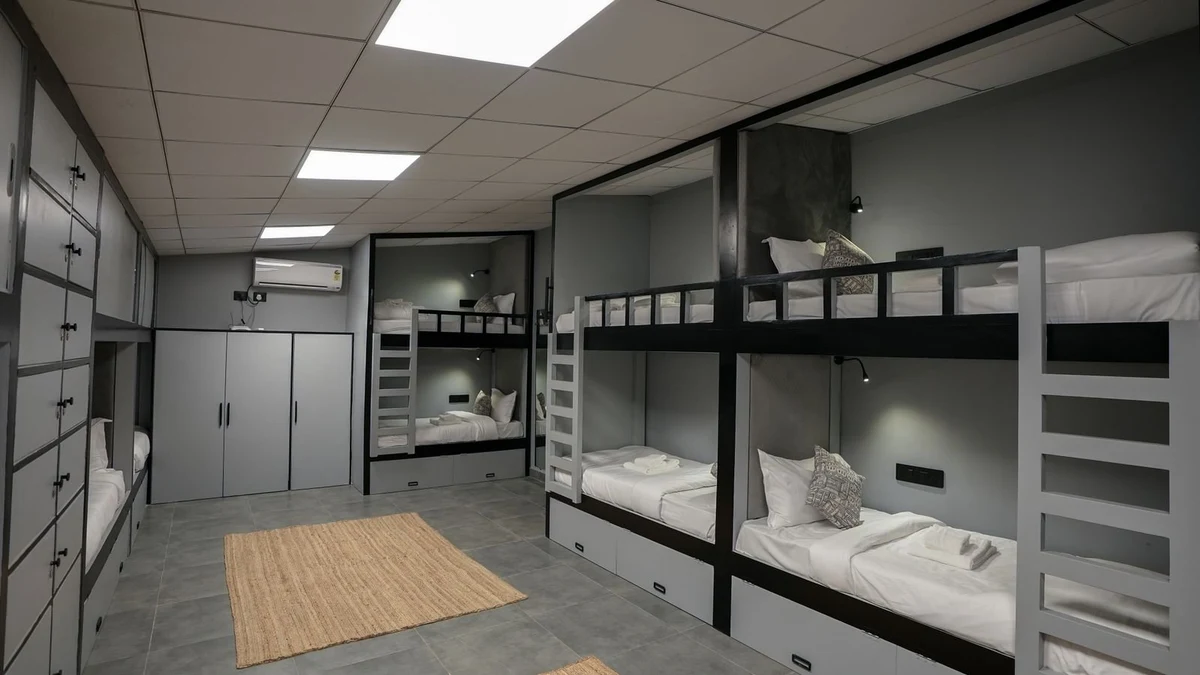
 Photo: Pexels
Most parents compare AISSEE and the RMS CET — the papers, the cutoffs, the prep books. Then the child clears one of them, and the family realises it never compared the actual schools: the room your child sleeps in, the bill you pay every year, and the quota wall you have to climb over. This is that comparison.
| Sainik Schools | Rashtriya Military Schools (RMS) | |
|---|---|---|
| Number of campuses | 33 (plus approved New Sainik Schools under a partnership scheme) | 5: Chail, Ajmer, Belgaum, Bengaluru, Dholpur |
| Run by | Sainik Schools Society, Ministry of Defence | Integrated Headquarters, MoD (Army) — a military establishment |
| Age | First ones from 1961 | Chail traces to 1922 — among India’s oldest boarding schools |
| Board | CBSE | CBSE |
| Entry classes | Class 6 and Class 9 | Class 6 and Class 9 |
| Fully residential? | Yes | Yes — no day scholars permitted at all |
| Motto | Varies by school | “Sheelam Param Bhushanam” — character is the highest virtue |
The structural difference that matters most: there are only five RMS campuses for the whole country, and Sainik Schools are in nearly every state. That single fact decides most of the rest — competition, quotas, and your odds.
This is where parents get surprised. RMS was built for defence families, and its seat split still shows it:
If defence-category seats stay vacant, they can be offered to civilians in the same year — but as a civilian family, you should treat RMS as a school where you are fighting for roughly one seat in ten. Sainik Schools flip this: they’re open to everyone, with 67% of seats reserved for the home state and 25% for children of defence personnel and ex-servicemen. A UP-domicile child applying to a UP Sainik School starts with the wind at their back; the same child at RMS starts as a 10%-quota applicant.
One more recent development: RMS now admits girls. The CET bulletin reserves 10% of Class 6 seats (capped at 30 across all five schools combined) and 10% of Class 9 seats for girls. Older guides still call RMS “all-boys” — that changed. Sainik Schools have admitted girls since 2021-22, with a 10% girls quota in Class 6 explained here.
This is the biggest honest difference between the two systems.
RMS is the cheapest premium boarding in India, by design. Published tuition figures (cross-checked across four sources; schools vary slightly, so treat officer figures as a range):
| RMS category | Tuition / year | One-time caution money |
|---|---|---|
| Wards of OR (all three services, incl. ex-servicemen) | ₹12,000 | ₹1,200 |
| Wards of JCOs | ₹18,000 | ₹1,800 |
| Wards of officers | ₹25,000–₹32,000 | ₹3,000–₹3,800 |
| Civilians | ₹51,000 | ₹6,000 |
| SC/ST | 25% of the above | as applicable |
Caution money is refunded without interest when the cadet leaves. Wards of personnel killed in action pay no tuition. There’s also a means-cum-merit scholarship system — full tuition remission for families earning below ₹3,00,000 a year. Note: this is tuition only; hostel, mess and uniform are charged on top (third-party estimates put civilian all-in totals around ₹80,000–90,000 a year, but these are not official figures — confirm with the school).
Sainik Schools cost more, and it varies by campus. Published 2026–27 figures cluster around ₹1.3–1.8 lakh a year all-inclusive (tuition + boarding + mess + training), with state-level defence scholarships and government concessions available for eligible categories. So a civilian family pays roughly two to three times more at a Sainik School than at an RMS — but gets a school in their home state with a 67% domicile quota.
Neither system is “free”. If a relative tells you RMS costs nothing, they’re remembering the defence-category tuition and forgetting the mess bill. Our boarding cost comparison puts these numbers next to private coaching hostels.
Both systems run a military-style residential routine: early-morning PT, assembly, academic classes, games in the evening, supervised prep, lights out. Both are CBSE. Both add drill, NCC exposure and obstacle-style physical training aimed at one thing — making a Class 6 entrant look, by Class 12, like someone the NDA would take seriously.
The texture differs. RMS cadets are “Georgians” (after King George VI, the founder), and the five campuses carry a century of regimental tradition — ante rooms, house rivalries, and a noticeably Army-flavoured culture, since the schools are run as a military establishment. Sainik Schools, being society-run and spread across states, vary more: a school in the Northeast and one in Rajasthan share the syllabus and the mission, but the food, the language on the parade ground and the state scholarships differ.
If your child has never lived away from home, both systems are an equal shock. The adjustment problem is a boarding problem, not a Sainik-vs-RMS problem.
Both systems exist to prepare boys and girls for the NDA and the armed forces — and both produce officers. But here’s what no brochure says clearly: neither guarantees an NDA selection. NDA entry still means clearing the UPSC written paper and then the SSB interview. A Wikipedia-sourced claim often repeated is that RIMC, the five RMS and the various Sainik Schools together contribute 25–30% of cadets to the training academies — plausible as a rough indicator of how strong the pipeline is, but not a promise any school can make to your child.
The real outcome difference is optionality. A Sainik School graduate who decides in Class 11 that the forces aren’t for them leaves with a CBSE science education and normal college options. The same is true at RMS. Neither school locks a child into uniform — the training is an advantage for the NDA route, not a contract.
Answer honestly — the pattern tells you which to prioritise:
The exam comparison — pattern, toughness, preparation overlap — is a separate piece. But choose the school first and the exam second, because the school is where your child actually lives for seven years.
Which is better, Sainik School or Rashtriya Military School? Neither is universally better. Sainik Schools (33 campuses) offer more seats, a home-state quota of 67 percent and a 10 percent girls quota in Class 6. RMS (5 campuses) is smaller, cheaper and runs directly under the Army’s military establishment, but reserves only 10 percent of seats for civilians.
What are the fees of Rashtriya Military Schools? RMS tuition is heavily subsidised: about Rs 12,000 per year for wards of OR, Rs 18,000 for JCO wards, Rs 25,000 to 32,000 for officer wards and Rs 51,000 for civilians, plus one-time caution money. Hostel, mess and uniform charges are extra and vary by school.
Can girls apply to Rashtriya Military Schools? Yes, now they can. The RMS CET 2026 bulletin reserves 10 percent of Class 6 seats (capped at 30 across all five schools) and 10 percent of Class 9 seats for girls. This is a recent change from the historically all-boys system.
Do Sainik Schools and RMS guarantee NDA selection? No school guarantees it. NDA entry always requires clearing the UPSC written exam and the SSB interview. Both systems prepare cadets for those stages through PT, drill, NCC and academics, but the commission is earned, not granted.
How many Sainik Schools and RMS are there in India? There are 33 established Sainik Schools run by the Sainik Schools Society, plus approved New Sainik Schools under a partnership scheme. There are exactly five Rashtriya Military Schools: Chail, Ajmer, Belgaum, Bengaluru and Dholpur.
Can civilians join Rashtriya Military Schools? Yes. RMS reserves 10 percent of seats for civilians; if defence-category seats go vacant they can also be offered to civilians in the same academic year. SC and ST candidates pay 25 percent of their category’s tuition fee.
How helpful was this article?