Last verified: 27 November 2026. The founding date (20 July 1962), the Yuvraj Bhawan origin, the Maharaja’s gift of palace and land, the 274-acre campus and the house names are ✅ CONFIRMED from Wikipedia and the school’s history as reproduced by multiple sources. The seat numbers are ✅ CONFIRMED from the AISSEE 2027 information bulletin (Appendix VI-A for Class 6, Appendix VI-A1 for Class 9), as reproduced by The Speedy Brains and cross-checked against SarkariJob, Enunciate Academy, Vikramaditya Academy and Sainik School Cadet. The fee figure is 🔶 REPORTED — it comes from the school’s official 2026-27 fee document as reproduced by The Speedy Brains (checked 28 October 2026); confirm the 2027-28 figure from the school before paying. The daily routine below is the school’s own published summer routine, as reproduced by The Speedy Brains. The “about 950 officers” figure is 🔶 REPORTED by The Speedy Brains, not an official school statistic. AISSEE 2027 dates, fees, age limits and exam pattern are ✅ CONFIRMED from the NTA public notice and information bulletin of 3 November 2026.
 Photo: Pexels
If you live in Madhya Pradesh, there is exactly one Sainik School in your state: Rewa. And it comes with a story no other Sainik School can match.
In 1951, a white tiger named Mohan was captured in the forests near Rewa by Maharaja Martand Singh. That tiger’s lineage — the only white tigers in captivity anywhere in the world — put this quiet Vindhyan city on the global map. A decade later, in 1962, the same Maharaja gave the Government of India his palace, Yuvraj Bhawan, and the land around it, so a Sainik School could be built there. The Maharaja of Gwalior had wanted the school in his city; Martand Singh settled the argument by giving his palace away for free.
Sainik School Rewa was established on 20 July 1962, founded by Lt Gen R. R. Narang. It is a purely residential, English-medium school, affiliated to CBSE, taking boys and girls from Class 6 to Class 12. It sits in Civil Lines, Rewa — 550 km from Bhopal, 235 km from Jabalpur, and just 3 km from the Rewa bus stand. Close enough to reach, far enough to be a world of its own.
| Fact | Detail | Status |
|---|---|---|
| School | Sainik School Rewa, Civil Lines, Rewa, Madhya Pradesh – 486001 | ✅ CONFIRMED |
| Founded | 20 July 1962, in Yuvraj Bhawan | ✅ CONFIRMED |
| Campus | 274 acres per Wikipedia; 242.77 acres allotted per the school’s own profile — see note below | 🔶 REPORTED (variance flagged) |
| Classes | VI to XII, purely residential, CBSE-affiliated, English medium | ✅ CONFIRMED |
| Enrolment | 500+ cadets | 🔶 REPORTED |
| Houses | 5 senior + 5 junior (rivers and mountains; mythological heroes) | ✅ CONFIRMED |
| Entry classes | Class 6 and Class 9, through AISSEE only | ✅ CONFIRMED |
| Class 6 seats (2027-28) | 80 (70 boys, 10 girls) | ✅ CONFIRMED |
| Class 9 seats (2027-28) | 14 (13 boys, 1 girl) | ✅ CONFIRMED |
| Annual fee | Rs 1,80,573 (2026-27, new Class 6 cadet, General/OBC) | 🔶 REPORTED |
| Contact | 07662-257109 · [email protected] · sainikschoolrewa.ac.in | ✅ CONFIRMED |
One discrepancy to note, because parents will find it themselves: Wikipedia and most profiles describe a 274-acre campus, while the school’s own profile — and our earlier Madhya Pradesh guide — records 242.77 acres allotted by the state government in 1962. The difference is likely the palace estate versus the allotted land. Either way, it is a large, self-contained residential campus with its own horse riding and swimming pool — both charged in the fee, as the fee table below shows.
For 2027-28, Rewa has 80 Class 6 seats and 14 Class 9 seats. Here is the split, exactly as the AISSEE 2027 bulletin lists it:
| Class 6 seats | Boys | Girls | Total |
|---|---|---|---|
| Madhya Pradesh domicile (67%) | 49 | 5 | 54 |
| Other states (33%) | 21 | 5 | 26 |
| Total | 70 | 10 | 80 |
Within the 70 boys’ seats, the category split is: SC 10, ST 4, OBC-NCL 20, Defence 8, General 28. Within the 49 home-state boys’ seats alone: SC 7, ST 3, OBC-NCL 14, Defence 6, General 19. The reservation structure follows the Sainik Schools SOP — SC 15%, ST 7.5%, OBC-NCL 27%, and 25% of the remainder for defence wards.
Class 9 is a much smaller door: 14 seats — 8 boys from Madhya Pradesh, 5 boys from other states, and 1 girl. If your child is in Class 8, understand the maths honestly: Class 9 entry at Rewa is one of the tightest in the country, and the form’s school-preference list should include other schools too. Our guide to choosing school preferences explains how to order them.
The home-state advantage is the single biggest fact in this guide. 54 of the 80 Class 6 seats go to Madhya Pradesh children first. A Madhya Pradesh child competes against other Madhya Pradesh children for those seats — not against the whole country. That is why the domicile certificate matters so much. Our domicile certificate guide covers what to obtain and how long it takes.
One more practical detail, from the 2025 counselling data: Rewa’s other-state Class 6 seats went to children from just four states — Bihar, Jharkhand, Rajasthan and Uttar Pradesh. If you are applying from outside Madhya Pradesh, that is the competition you are actually in.
The school’s official 2026-27 fee document — reproduced by The Speedy Brains after checking the school’s site — puts a new Class 6 cadet’s first-year total at Rs 1,80,573 for General and OBC category (Rs 1,79,073 for SC/ST):
| Item (2026-27, new Class 6 cadet) | Amount |
|---|---|
| Tuition fee | ₹1,28,615 |
| Diet charges | ₹15,338 |
| Clothing charges | ₹15,000 |
| Incidental charges | ₹13,000 |
| Horse riding and swimming pool | ₹2,500 |
| Water and electricity | ₹3,120 |
| Caution money (General/OBC; ₹1,500 for SC/ST) | ₹3,000 |
| Total, General/OBC | ₹1,80,573 |
| Total, SC/ST | ₹1,79,073 |
Two things to know before you budget. First, the school says fees rise by 10% every year on the Board of Governors’ decision, and ₹100 is added to each instalment if you pay in parts — so the 2027-28 figure will be higher than this sheet. Second, the fee includes horse riding and a swimming pool, which most Sainik Schools charge separately or do not offer at all. Confirm the 2027-28 figure from the school itself before paying anything.
Admission is only through the AISSEE — there is no management quota, no donation route, no separate Rewa paper. The exam is the same for every school in India.
| Step | Date | Status |
|---|---|---|
| AISSEE 2027 form (online) | 3 November – 2 December 2026 (11:50 PM) | ✅ CONFIRMED |
| Late window (₹500 late fee) | 3–6 December 2026 | ✅ CONFIRMED |
| Correction window | 7–9 December 2026 | ✅ CONFIRMED |
| Exam city announced | 11 January 2027 | ✅ CONFIRMED |
| Admit card download | 25 January 2027 | ✅ CONFIRMED |
| AISSEE 2027 exam | Sunday, 31 January 2027 | ✅ CONFIRMED |
| Answer key, result, e-counselling, medical, admission | February–June 2027 | 🔶 EXPECTED (2026 pattern) |
The exam pattern, confirmed from the 2026 bulletin and expected to repeat: Class 6 is 125 questions, 300 marks, 150 minutes, with Maths alone worth 150 marks. Class 9 is 150 questions, 400 marks, 180 minutes. There is no negative marking, and a child must score at least 25% in each section and 40% overall to qualify (not applicable to SC/ST). The application fee is ₹850 for General, OBC-NCL and defence wards, and ₹700 for SC/ST.
Two practical warnings. First, the form needs a photo (10–200 KB, JPG, white background), a signature, a left-thumb impression and the certificates — birth, domicile, category and defence papers where applicable. Our photo and signature guide lists the exact specs and the rejection reasons NTA actually flags. Second, the form is complete only when the Confirmation Page is generated. A fee paid is not a form submitted.
Unlike most Sainik Schools, Rewa publishes its daily routine — this is the school’s own summer timetable, as reproduced by The Speedy Brains. Timings change with the season, but the shape of the day is the point.
| Activity | Time |
|---|---|
| PT (Monday–Friday) | 6:15 – 6:45 am |
| Wash and change | 6:50 – 7:30 am |
| Breakfast | 7:30 – 8:10 am |
| Assembly | 8:15 – 8:30 am |
| Periods 1–4 | 8:30 – 11:10 am |
| Break | 11:10 – 11:25 am |
| Periods 5–8 (8th period: clubs and general studies) | 11:25 am – 2:00 pm |
| Lunch | 2:00 – 2:40 pm |
| NCC (Tuesday, Friday) / games and sports | 3:15 – 5:15 pm / 4:00 – 5:00 pm |
| Tea, wash and change | 5:15 – 6:00 pm |
| Evening prep | 6:00 – 7:55 pm |
| Dinner | 8:00 – 8:30 pm |
| Night prep in houses | 8:40 – 10:00 pm |
| Lights out | 10:15 pm |
That 6:15 am PT start is the part parents underestimate. A child who has never woken before 7 am will find the first month hard — not the studies, the mornings. If your child is serious about Rewa, start moving the wake-up time earlier in December, not in January.
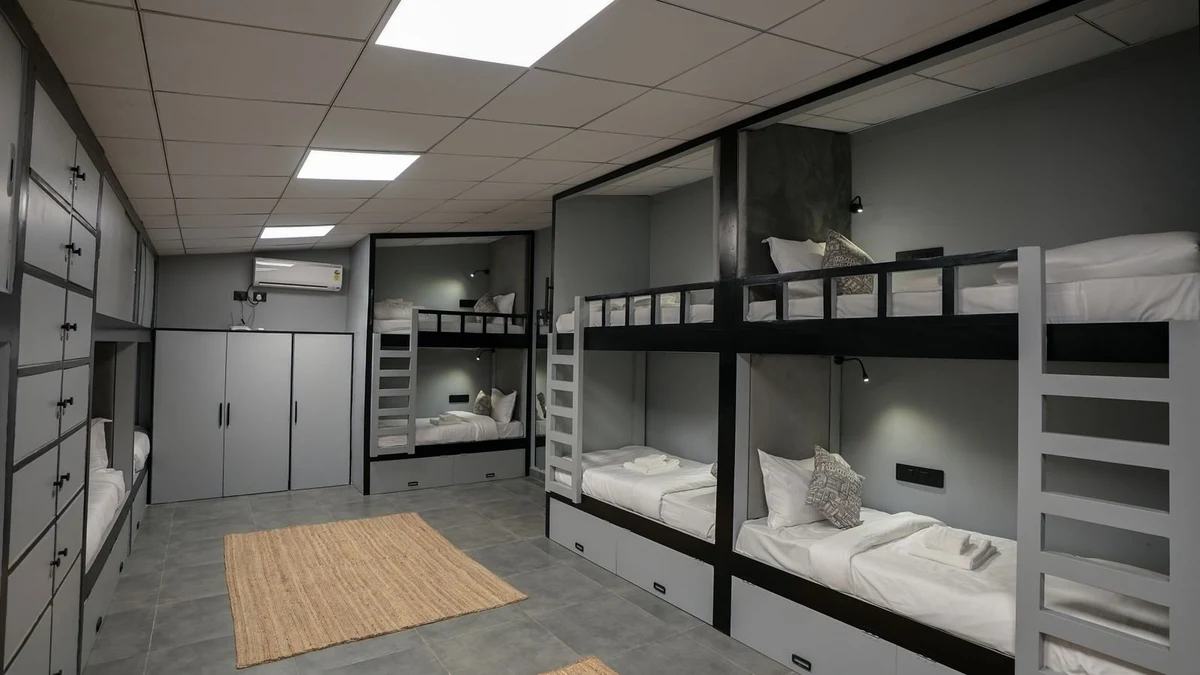
Houses are the second family. The five senior houses are named after the rivers and mountain ranges of Madhya Pradesh — Betwa, Chambal, Narmada, Satpura and Vindhya — and the five junior houses after heroes of Indian mythology — Abhimanyu, Bharat, Dhruv, Eklavya and Luv-Kush. Each house has a housemaster, an attached housemaster and a matron or hostel superintendent looking after the cadets’ personal hygiene and comfort, with study rooms, recreation areas and table tennis in the hostels.
Rewa’s claim, as reported by The Speedy Brains, is that the school has contributed about 950 officers to the armed forces so far. Treat that as the school’s reported figure rather than an official statistic — but it fits the school’s age. Founded in 1962, Rewa is among the oldest Sainik Schools in India, part of the second wave after the first schools of 1961, and it has had more than six decades of cadets passing through its gates.
The campus backs the claim up with facilities: an IT centre, science and language laboratories, an auditorium, library, art room, audio-visual room, wood, metal and electrical workshops, an NCC office and armoury, a cadets’ mess that seats everyone in one sitting, and playgrounds for hockey, football, cricket and athletics — plus the horse riding and swimming pool already mentioned. It is, in short, the full Sainik School package — and the reason Madhya Pradesh’s single seat in the scheme is one of the most contested in central India.
How many seats does Sainik School Rewa have for 2027-28?
Rewa has 80 Class 6 seats — 70 for boys (49 Madhya Pradesh domicile and 21 other states) and 10 for girls (5 Madhya Pradesh and 5 other states) — and 14 Class 9 seats (13 boys and 1 girl). The figures are tentative, as listed in the AISSEE 2027 information bulletin, Appendices VI-A and VI-A1.
When was Sainik School Rewa founded?
It was established on 20 July 1962 in Yuvraj Bhawan, the palace of Maharaja Martand Singh Ju Deo of Rewa, who gave the palace and the surrounding land to the government. It is Madhya Pradesh’s only Sainik School.
How do I get my child admitted to Sainik School Rewa?
Only through AISSEE, the national entrance exam run by NTA. For 2027-28, apply online at exams.nta.nic.in/sainik-school-society by 2 December 2026. Class 6 needs age 10 to 12 on 31 March 2027; Class 9 needs age 13 to 15 and a passed Class 8.
What are the fees at Sainik School Rewa?
The school’s official 2026-27 fee document puts a new Class 6 cadet’s first-year total at Rs 1,80,573 for General and OBC category (Rs 1,79,073 for SC/ST), including tuition of Rs 1,28,615, diet, clothing, horse riding and swimming. Fees rise by about 10 percent a year, so confirm the 2027-28 figure from the school before paying.
Does Sainik School Rewa admit girls?
Yes — 10 girls’ seats in Class 6 for 2027-28, five for Madhya Pradesh girls and five for girls from other states, plus one girls’ seat in Class 9.
What is the home-state advantage for Madhya Pradesh children at Rewa?
67 percent of seats are reserved for Madhya Pradesh-domicile children. In Class 6 that is 54 of the 80 seats — 49 boys and 5 girls. A Madhya Pradesh child competes first against other Madhya Pradesh children for those seats, not against the whole country.
How helpful was this article?