Last verified: 25 October 2026. Sainik Schools are CBSE-affiliated residential schools, so their assessment pattern follows the CBSE-affiliated school model described below. Exact schedules, weightages and promotion rules vary from school to school — where this article says a practice “varies”, it genuinely varies, so confirm the details in your own school’s assessment circular rather than treating this guide as your school’s rulebook.
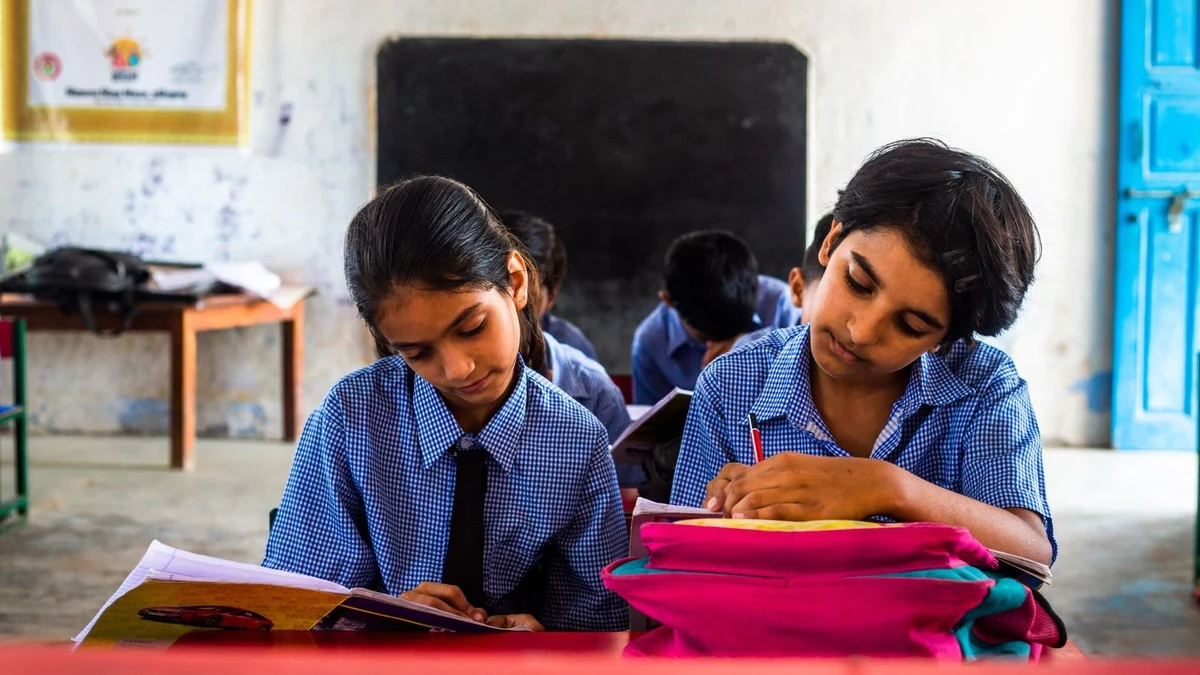
 Photo: Pexels
Parents spend a year preparing a child for AISSEE, and then — if the seat comes — the entrance exam is never mentioned again. Inside the school, a completely different exam system takes over. The parents who cope best with Sainik School life are the ones who stop thinking in terms of “one big exam” and start thinking in terms of “a test every few weeks, all year, every year.”
The good news first: there is nothing exotic about it. Sainik Schools are affiliated to CBSE, so the assessment structure will look familiar to any parent whose child has studied in a CBSE school. What is different is the intensity — the boarding routine, the supervised study hours, and the sheer frequency of testing.
A cadet’s year is built from four layers, each with a different job:
1. Unit tests and periodic tests. Short tests through each term, covering the last few weeks of teaching — the school’s early-warning system. A weak unit-test score in July is a problem the school can still fix by September.
2. Half-yearly examinations. A full-syllabus-till-date exam midway through the year, with a proper timetable and report card — the first serious checkpoint.
3. Annual examinations. The end-of-year exam that decides promotion, and the one cadets feel most pressure about.
4. CBSE board examinations. In Classes 10 and 12, the school’s internal exams run alongside the externally set and marked CBSE board exams. Internal marks do not replace board marks — but the school’s own tests are the preparation that makes board performance possible.
Above all this sit the non-academic assessments: physical training, drill, NCC and co-curricular performance, which feed into a cadet’s overall record and house points.
Exact dates and weightages differ by school, but the shape of the year is consistent across CBSE-affiliated residential schools:
| Period | What usually happens | Why it matters to parents |
|---|---|---|
| Start of term | Baseline tests and syllabus briefing | Shows where your child stands against the class |
| Through each term | Periodic unit tests, class work, homework checks | The earliest warning of a weak subject — act here, not in March |
| Mid-year | Half-yearly exams + parent-teacher meeting | First full picture of the year; the right moment for honest conversations |
| Second term | More unit tests, pre-board practice (Classes 10 and 12) | Board-year cadets get exam-hall practice before the real thing |
| Year end | Annual exams, results, promotion decisions | Decides the next class; supplementary tests, where offered, follow quickly |
| Through the year | PT, drill, NCC, sports and cultural assessments | Builds the record that houses, appointments and recommendations draw on |
Treat this table as the typical pattern, not your school’s calendar. The school will publish its own assessment schedule at the start of the year — pin that to your fridge, not this article.
This is the question parents ask most anxiously, and the honest answer is: it varies. CBSE-affiliated schools set their own promotion criteria within CBSE’s affiliation norms, so one school’s rulebook is not another’s. What is broadly true:
The practical advice is simple: at admission, ask for the school’s assessment and promotion circular in writing, and read it before the first term ends.
A report card from a residential school rewards a different kind of reading than a day-school one:
If there is one feature of internal assessment that day schools struggle to match, it is this. A Sainik School cadet who is weak in a subject does not simply get a low mark and a hope for better luck next term. Evening prep hours are supervised, teachers are on campus, and remedial sessions re-teach the weak topics in small groups. This is routine, not punishment — a large share of every batch passes through it at some point.
Not directly. NDA selection is the UPSC written examination, the SSB interview and medical standards — no school’s internal marks appear in that process. But the NDA written paper draws heavily on the Class 11-12 mathematics and general ability syllabus, and a cadet who has spent years in a system of frequent testing and supervised study arrives at that paper far better prepared. Internal exams are the training ground, not the ticket.
Do Sainik Schools hold their own exams after AISSEE?
Yes. AISSEE is only the entrance exam. Once admitted, cadets sit the school’s own unit tests, half-yearly and annual exams, and CBSE board exams in Classes 10 and 12, like any other CBSE-affiliated school.
Are internal exams in a Sainik School tougher than in a normal school?
The syllabus is the same CBSE syllabus, but the routine is tighter: regular tests, supervised evening prep and remedial classes mean cadets are tested more often, which feels tougher even though the content is standard.
What happens if a cadet fails a subject in the annual exam?
It depends on the school’s promotion rules, which vary. Typically there is a supplementary or compartment-style re-test for a limited number of subjects, and repeated failure can mean repeating the class. Always check your school’s assessment circular rather than assuming one rule.
Do internal exam marks matter for NDA later?
Not directly. NDA selection runs on the UPSC written exam, SSB interview and medicals. But strong internal performance builds the Class 11-12 foundation the NDA written exam draws on, especially in mathematics.
How often will I see my child’s marks as a parent?
Most schools share results after each major exam round — unit tests, half-yearly and annual — and many hold parent-teacher meetings each term. Ask the school for its result-sharing calendar at admission time.
What is remedial teaching in a Sainik School?
Extra supervised study sessions, usually in the evening prep hours, where teachers re-teach topics a cadet is weak in. It is routine support, not punishment, and it is one of the main ways schools lift borderline cadets.
How helpful was this article?