Last verified: 11 November 2026. All paper patterns, timings, question counts and the no-negative-marking rule below are ✅ CONFIRMED from the NTA AISSEE 2027 Information Bulletin (3 November 2026), as summarised by CollegeDunia, AglaSem, Careers360 and the Tasvia Academy guide checked against the bulletin on 5 November 2026. Practical bubbling and rough-work advice is standard NTA OMR practice — always follow the instructions printed on your child’s admit card, which is the final authority on exam day.
 Photo: Pexels
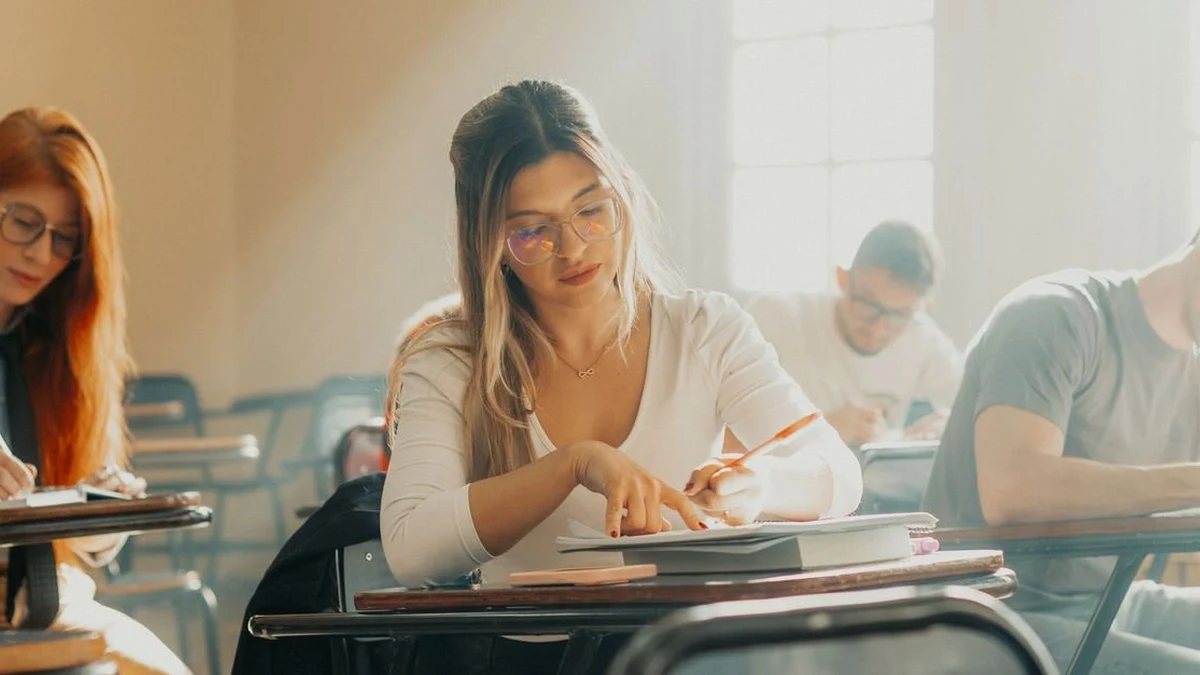
On Sunday, 31 January 2027, your child will sit in a classroom at 2 PM with a question booklet in one hand and an OMR answer sheet in the other. There is no computer, no mouse, no “submit” button. Every mark your child earns has to travel from their head, through a pencil-and-paper calculation, into a small darkened circle — and if that circle is filled wrong, the answer does not count, no matter how correct the thinking was.
That is why the OMR sheet deserves its own preparation. Children who have only ever practised in notebooks or on apps often lose marks on their first OMR exam — not because they did not know the answers, but because they bubbled the wrong row, left circles half-filled, or ran out of time while copying answers across. With 81 days left, this is the cheapest skill to fix.
| Class 6 | Class 9 | |
|---|---|---|
| Questions | 125 | 150 |
| Total marks | 300 | 400 |
| Duration | 150 minutes (2:00–4:30 PM) | 180 minutes (2:00–5:00 PM) |
| Mode | Pen-and-paper, OMR sheet | Pen-and-paper, OMR sheet |
| Negative marking | None | None |
| Medium | English or Hindi (as chosen in the form) | English only |
The Class 6 paper has 125 questions for 300 marks: Mathematics 50 questions × 3 marks = 150, and Intelligence, Language and General Knowledge 25 questions × 2 marks = 50 each. The Class 9 paper has 150 questions for 400 marks: Mathematics 50 questions × 4 marks = 200, and English, Intelligence, General Science and Social Science 25 questions × 2 marks = 50 each. In both papers, Mathematics alone is half the total marks — that is where the exam is decided.
There is also a qualifying standard in the bulletin: at least 25% marks in each subject and 40% in aggregate. A child cannot clear the exam by acing Maths alone and ignoring everything else. The 25%-per-subject rule is relaxed for SC/ST candidates in the 33 Sainik Schools. And because there is no negative marking, a wrong answer and a blank both score zero — so every question should be attempted.
The OMR (Optical Mark Recognition) sheet is a separate answer sheet. The question booklet contains the questions; the OMR sheet contains rows of circles, one row per question, with four circles marked A, B, C and D. The machine reads only the darkened circles. It cannot read anything written in the question booklet, any tick mark, or any half-filled circle.
A few things that surprise first-timers:
The most common OMR disaster is the shifted row — the child solves question 41 but bubbles the circle for question 42, and every answer after that is one row off. It happens to careful children, because it happens when they are tired and rushing. The fix is a method, practised until it is automatic:
1. Solve in blocks, bubble in blocks. Do five questions in the booklet, then bubble all five at once, checking each question number against the OMR row before you darken it. Never bubble one question at a time while flipping pages, and never solve the whole paper first and bubble everything in the last ten minutes.
2. Say the number silently. Before darkening a circle, glance at the question number and the row number together — “41, row 41, option C” — and then darken. It takes one second and prevents the shift that ruins a paper.
3. Mark doubtful questions in the booklet. Put a small circle next to the question number in the booklet, not on the OMR sheet. In the final 15 minutes, return to those questions, make your best guess, and bubble them. Remember: with no negative marking, a guess can only help.
4. Keep a time budget per section. For Class 6, 150 minutes for 125 questions is about 72 seconds per question — but Maths questions take longer, so budget roughly 70 minutes for Maths and 20 minutes each for Intelligence, Language and GK, keeping 10–15 minutes at the end for bubbling checks and guesses. For Class 9, 180 minutes for 150 questions allows about 80 minutes for Maths and 20 minutes each for the other four sections, again with time kept back at the end.
5. Practise on real OMR sheets. At least three or four of your child’s remaining mock tests should be done on printed OMR sheets with a ballpoint pen — not on a screen, not in a notebook. The first time should not be 31 January.
In the final week before 31 January, run this drill twice: one full previous-year paper, on a printed OMR sheet, in the exact 2 PM slot, with a ballpoint pen and a timer. Score it, then check not just which answers were wrong, but why — was it knowledge, or was it a bubbling slip, a skipped row, a question left unattempted? In most first-time OMR papers, the second category is worth 10–20 marks. That is the cheapest improvement available in the last week of preparation, and it needs no new studying at all.
If your child has not yet applied, remember the form window closes on 2 December 2026 (late window 3–6 December with a Rs. 500 late fee), and the correction window runs 7–9 December. Read our week-by-week plan to the 2 December deadline and our guide to what happens after you submit the form. For the no-negative-marking strategy in detail, see Attempt Every Question: the no-negative-marking strategy, and for OMR practice drills, the OMR mistakes practice plan.
Is AISSEE 2027 an online or offline exam? Offline. AISSEE 2027 is a pen-and-paper test with multiple-choice questions answered on an OMR answer sheet. The exam is on Sunday, 31 January 2027.
Is there negative marking in AISSEE 2027? No. A wrong answer scores zero and a blank also scores zero, so there is no penalty for attempting a question you are unsure about.
What should my child use to fill the OMR sheet in AISSEE 2027? A blue or black ballpoint pen, as instructed on the admit card. Darken the chosen circle completely and do not use a pencil, gel pen or whitener unless the admit card says otherwise.
Where is rough work allowed in AISSEE 2027? Rough work is done in the space provided in the question paper booklet, not on the OMR answer sheet. Nothing written on the question paper is scored.
How many questions and marks are there in AISSEE 2027 Class 6 and Class 9? Class 6 has 125 questions for 300 marks in 150 minutes. Class 9 has 150 questions for 400 marks in 180 minutes. Mathematics carries half the marks in both papers.
What is the qualifying standard for AISSEE 2027? The Information Bulletin sets a minimum of 25 percent in each subject and 40 percent in aggregate. This standard is relaxed for SC and ST candidates in the 33 Sainik Schools.
How helpful was this article?